




PVC Prices and News

Cost support returns to Türkiye's polymer markets, reviving buying interest by Merve Madakbaşı
Türkiye’s polymer markets had turned lower after staging a sharp rally in March and April, driven by a combination of war-related physical supply disruptions, soaring freight rates, and panic buying. Unlike polyolefins, however, PVC prices joined the uptrend only in March before entering a downturn earlier, while the corrections that began in May for PP and PE turned into a free fall by mid-June... 17-07-2026
PVC rebounds across China and SEA as upstream rally reshapes market sentiment by Thi Huong Nguyen
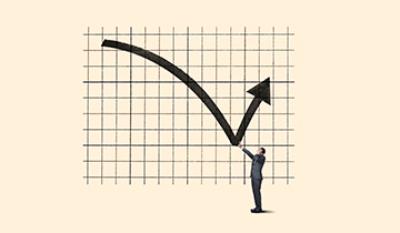
China’s and Southeast Asia’s PVC markets staged their first meaningful recovery in nearly four months this week as renewed geopolitical tensions in the Middle East triggered a sharp rally in crude oil and restored cost support across the upstream chain. Brent futures soared more than 11% over the past two settlements, while Asian spot ethylene prices on CFR China and CFR Southeast Asia gained around 7-10% so far this week, according to ChemOrbis Price Wizard... 16-07-2026


Crude oil surges on renewed war premium; will it reverse the polymer slump? by Esra Ersöz
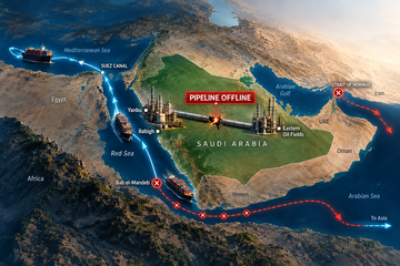
The renewed geopolitical tensions have pushed Brent crude back into the mid-$80s/bbl, rapidly rebuilding some of the war-risk premium that had evaporated after June's ceasefire hopes. This has also helped buoy the sentiment recently in polymer markets, where prices have been on a downturn for the past couple of months. After months of sluggish demand, ample supplies, and relentless price erosion, sellers are seizing on higher feedstock costs to argue that the market has reached its bottom... 15-07-2026

European PVC tumbles in July as deep discounts fail to unlock demand by Manolya Tufan
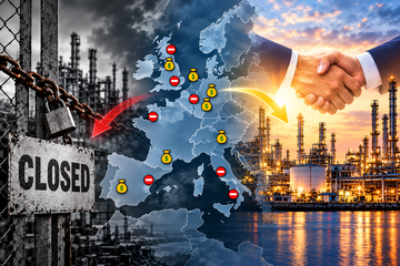
European PVC prices suffered their steepest monthly correction in years as producers increasingly prioritized volume over margins amid persistently weak demand and mounting inventory pressure. Although suppliers rolled out triple-digit reductions across much of the market, buying activity remained subdued, with converters largely limiting purchases to contractual needs while continuing to expect further price erosion... 10-07-2026

Duty-free US plastics: Beyond polymers, a new challenge for Europe's and Türkiye's downstream industries by Manolya Tufan
The EU-US tariff agreement has largely been viewed through the lens of polymers, particularly PE, and as a boost for US polymer exports. Yet the implications reach well beyond resin markets. By eliminating customs duties across the entire Chapter 39, the regulation also covers a broad range of semi-finished and finished plastic products, potentially reshaping competition across Europe's downstream plastics value chain... 08-07-2026

Unlike other polymers that are derived from crude oil and natural gas, Polyvinyl Chloride (PVC) is part of the chlor-alkali industry. The main raw material used to produce PVC is sodium chloride. Caustic soda and chlorine are made via the electrolysis of sodium chloride. While caustic soda has its own uses, ethylene dichloride (EDC) is made by the chlorination of ethylene and chlorine, and is used primarily in the production of vinyl chloride monomer (VCM). In the final stage, PVC is produced by polymerization of VCM.
PVC is divided into two categories: emulsion PVC and suspension PVC. While emulsion PVC (E-PVC) has a limited area of use, suspension PVC (S-PVC) enjoys a greater area of use. S-PVC grades are characterized by K values. K67-68 is the most commonly used PVC type. PVC K67-68 is used in profile and pipe applications and has a direct relation to the construction industry. Due to its dependence on the construction sector, PVC is also directly affected by the economic performance of countries, either positively or negatively.
PVC K64-65 is also used in the manufacture of pipes and profiles. K58 is used in rigid applications, such as injection molding, and the manufacture of credit cards and food packaging. K70 is used in the manufacture of shoes, cables, hoses, shower curtains, tablecloths and stationery.
Looking at the top buyers and sellers on a country-based breakdown, the USA is at the top of the list of largest exporters with a market share of more than 20%. Taiwan is the second largest PVC supplier, followed by Germany. India is the top PVC buyer in global markets by a long way. Although China has reduced its dependence on imports with new PVC capacities it has commissioned over the last 20 years, it still ranks as the second largest PVC importer in the world. In addition, China has the world's largest acetylene-based PVC capacities. China is followed by Türkiye and Italy, having almost the same level of market share in PVC imports.
ChemOrbis Polyvinyl Chloride (PVC) prices and Plastics News section contain information on the market trends, as well as supply-demand factors and production costs that determine the pricing, statistics on imports and exports, along with maintenance shutdowns, restarts, and new capacities related to PVC facilities.
Products:
E-PVC, S-PVC K67-68, S-PVC K70, S-PVC K64-65, S-PVC K58, S-PVC K67-68 (Acetylene), S-PVC K64-65 (Acetylene), S- PVC K70 (Acetylene)
About Us
DOWNLOADYOUR MOBILEAPP TODAY

