


Naphtha rally intensifies in Europe, Asia; Europe hits highest since March 2022
by Esra Ersöz - eersoz@chemorbis.com

Naphtha markets in Europe and Asia have extended their steep rally, with prices rising by around 60-67% from their June lows. The latest gains have lifted European naphtha to its highest level since March 2022, when energy markets soared in the immediate aftermath of Russia’s invasion of Ukraine, while Asian prices have reached their highest since early May.
European naphtha up nearly 60% from June, surpassing war-driven April peak
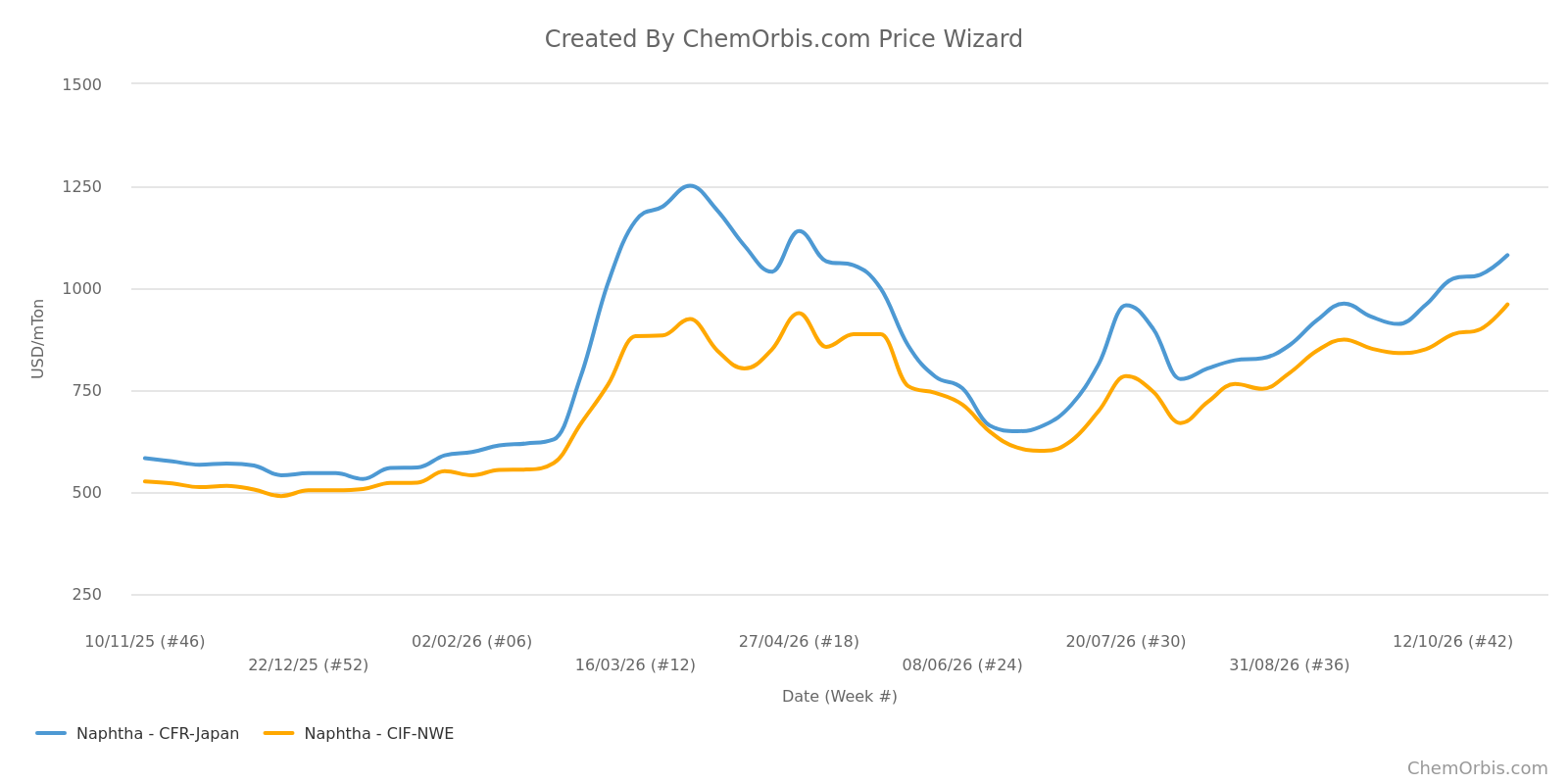
In Europe, naphtha prices have climbed to $960/ton, marking their highest level since March 2022. The current level represents nearly 60% increase from June.
European naphtha has also surpassed the $939/ton peak seen in April, when the war in the Middle East and disruptions surrounding the Strait of Hormuz sent energy and feedstock costs sharply higher.
The latest rally reflects an increasingly tight prompt market in Europe. ARA naphtha inventories fell by more than 25% in the final week of October and stood substantially below year-ago levels, while prompt backwardation strengthened sharply, pointing to tight nearby availability.
Meanwhile, the widening East-West spread has added another layer of support. Stronger Asian fundamentals have encouraged the market to pull barrels eastward, increasing competition for European and Mediterranean cargoes. The East-West spread widened to around $80/ton by late October, as Asia sought to attract additional supplies from Europe and the US.
Petrochemical buying has also provided some support to the European market recently. In the Mediterranean, limited direct supply combined with increased interest from petrochemical consumers has contributed to the gains.
At the same time, naphtha availability from the Arabian Gulf remains well below pre-conflict levels despite recovering crude flows through the Strait of Hormuz, keeping the global supply picture tight.
Asian naphtha hits 6-month highs, but still behind the 2026 peak
The rise has been even steeper in Asia.
Asian naphtha prices currently stand at $1081/ton, up nearly 67% from mid-June, while the rise from the beginning of October amounts to 19% roughly alone in one month. The latest level marks the highest since early May, although they currently stay below the peak seen in late March at $1251/ton driven by the Iran war.
Supply concerns intensified across Asia during October as a concentration of planned refinery maintenance in China, Japan, India and South Korea restricted regional naphtha availability. Simultaneous shutdowns at several facilities reduced supply flexibility and increased competition for alternative cargoes.
The maintenance-related constraints have come on top of a broader shortage of Middle Eastern feedstock supplies. Asian seaborne naphtha imports have remained sharply below year-ago levels during 2026, with the reduction in Middle Eastern shipments accounting for most of the decline.
Meanwhile, stronger crude oil prices have added further cost pressure, reinforcing the uptrend in naphtha.
Some supply relief could emerge during November as refineries return from planned maintenance. However, the pace of these restarts, the availability of Middle Eastern barrels and crude oil movements will determine how much pressure can actually ease.
Different regional drivers, same result: sharply higher feedstock costs
Although the immediate triggers differ between the two regions, Europe and Asia are ultimately facing the same outcome: a dramatic increase in feedstock costs.
Europe is grappling with exceptionally tight prompt inventories, limited replacement supplies and competition from Asia for available barrels. In Asia, meanwhile, refinery maintenance has exacerbated an already constrained supply environment, while higher crude costs have provided additional support.
The resulting increases are substantial. European naphtha is almost 60% above its June level, while Asian naphtha has risen nearly 67% from mid-June.
These gains are particularly significant for petrochemical producers because they are unfolding against a backdrop of still-fragile downstream demand and persistent overcapacity in several polymer markets.
European naphtha up nearly 60% from June, surpassing war-driven April peak
In Europe, naphtha prices have climbed to $960/ton, marking their highest level since March 2022. The current level represents nearly 60% increase from June.
European naphtha has also surpassed the $939/ton peak seen in April, when the war in the Middle East and disruptions surrounding the Strait of Hormuz sent energy and feedstock costs sharply higher.
The latest rally reflects an increasingly tight prompt market in Europe. ARA naphtha inventories fell by more than 25% in the final week of October and stood substantially below year-ago levels, while prompt backwardation strengthened sharply, pointing to tight nearby availability.
Meanwhile, the widening East-West spread has added another layer of support. Stronger Asian fundamentals have encouraged the market to pull barrels eastward, increasing competition for European and Mediterranean cargoes. The East-West spread widened to around $80/ton by late October, as Asia sought to attract additional supplies from Europe and the US.
Petrochemical buying has also provided some support to the European market recently. In the Mediterranean, limited direct supply combined with increased interest from petrochemical consumers has contributed to the gains.
At the same time, naphtha availability from the Arabian Gulf remains well below pre-conflict levels despite recovering crude flows through the Strait of Hormuz, keeping the global supply picture tight.
Asian naphtha hits 6-month highs, but still behind the 2026 peak
The rise has been even steeper in Asia.
Asian naphtha prices currently stand at $1081/ton, up nearly 67% from mid-June, while the rise from the beginning of October amounts to 19% roughly alone in one month. The latest level marks the highest since early May, although they currently stay below the peak seen in late March at $1251/ton driven by the Iran war.
Supply concerns intensified across Asia during October as a concentration of planned refinery maintenance in China, Japan, India and South Korea restricted regional naphtha availability. Simultaneous shutdowns at several facilities reduced supply flexibility and increased competition for alternative cargoes.
The maintenance-related constraints have come on top of a broader shortage of Middle Eastern feedstock supplies. Asian seaborne naphtha imports have remained sharply below year-ago levels during 2026, with the reduction in Middle Eastern shipments accounting for most of the decline.
Meanwhile, stronger crude oil prices have added further cost pressure, reinforcing the uptrend in naphtha.
Some supply relief could emerge during November as refineries return from planned maintenance. However, the pace of these restarts, the availability of Middle Eastern barrels and crude oil movements will determine how much pressure can actually ease.
Different regional drivers, same result: sharply higher feedstock costs
Although the immediate triggers differ between the two regions, Europe and Asia are ultimately facing the same outcome: a dramatic increase in feedstock costs.
Europe is grappling with exceptionally tight prompt inventories, limited replacement supplies and competition from Asia for available barrels. In Asia, meanwhile, refinery maintenance has exacerbated an already constrained supply environment, while higher crude costs have provided additional support.
The resulting increases are substantial. European naphtha is almost 60% above its June level, while Asian naphtha has risen nearly 67% from mid-June.
These gains are particularly significant for petrochemical producers because they are unfolding against a backdrop of still-fragile downstream demand and persistent overcapacity in several polymer markets.
The sharp increase in naphtha therefore raises a key question heading into the final months of the year: to what extent can petrochemical producers pass rapidly rising feedstock costs downstream before higher prices begin to weigh further on demand?
More free plastics news
Plastic resin (PP, LDPE, LLDPE ,HDPE, PVC, GPS; HIPS, PET, ABS) prices, polymer market trends, and more...- After Germany and the Netherlands, Vynova files for bankruptcy in Belgium: Where do its remaining European operations stand?
- Oil price plunge rattles polymer markets: Will the rally lose steam?
- Europe’s petchem plants close, assets change hands: How far has restructuring progressed?
- Suez recovery gains ground, but global shipping remains far from normal
- Saudi pipeline outage compounds supply and logistics risks, fueling PP, PE rally
- S Korea’s petchem restructuring moves from talks to closures
- European natural gas, Asian LNG hit fresh highs amid Middle East tensions
- Global shipping faces persistent bottlenecks across major trade routes
- War or recovery? H1 earnings reshuffle petchem winners and losers
- Oil roller coaster in July H2 fails to derail most polymer rallies
