



Chinese PP loses competitiveness in SE Asia amid tight prompt supply, higher freights
by Thi Huong Nguyen - thihuongnguyen@chemorbis.com
by Merve Sezgün - msezgun@chemorbis.com 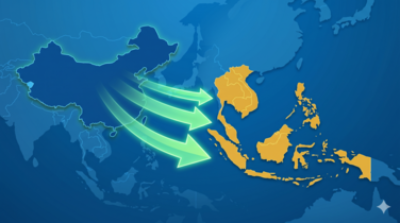
Chinese homo-PP has lost much of its previous competitive edge in Southeast Asia, as limited supply at home, stronger costs and worsening logistics have pushed Chinese sellers to raise their export offers despite persistently weak regional demand. Some Chinese offers have even moved above Middle Eastern levels, marking a notable shift from earlier this year when aggressively priced Chinese cargoes regularly undercut other origins and helped cap price gains across the region.
The change highlights how current market conditions have reduced Chinese exporters’ ability to compete aggressively in Southeast Asia. With domestic PP prices rising, availability tightening and intra-Asia freight costs climbing, sellers are increasingly prioritizing firmer price levels even at the expense of sales volumes in a demand-starved market.
Chinese offers drive the recent SEA PP upturn
After a brief period of stability in late August, the Southeast Asian import PP market regained upward momentum as September began, with sellers raising offers amid surging crude futures and steadily firmer spot propylene prices. Chinese material stood out as the main driver of the latest increase, with tighter availability in China, compounded by logistical disruptions, leaving Chinese suppliers with less room to offer competitively. However, the impact of these supportive factors remained partly offset by subdued demand, as buyers continued to limit purchases in the face of elevated price levels.
As of the week ending September 4, offers for Middle Eastern material were largely unchanged, while ASEAN-origin cargoes increased by $20-50/ton week on week. Chinese offers, meanwhile, saw sharper increases of up to $60/ton, with the upper end climbing above $1300/ton CIF Southeast Asia, cash, to reach $1320/ton.
According to the ChemOrbis Price Index, the weekly average for Chinese offers carried only a marginal $5/ton discount to ASEAN material. More notably, the weekly average for Chinese material stood at a $10/ton premium over Middle Eastern offers, underscoring how much China’s previous price advantage in Southeast Asia has eroded.
The upward movement in Southeast Asia also occurred alongside stronger Chinese domestic and export homo-PP raffia and injection markets, supported by robust costs, surging Dalian futures and tighter supply. China’s domestic offers posted steep weekly gains of CNY300-450/ton ($45-67/ton), while export prices rose by $10-30/ton week on week for a third consecutive week, reinforcing the firmer stance of Chinese sellers in nearby Southeast Asia.
Moreover, the firm stance of Chinese sellers was reflected in actual transactions. A deal for Chinese homo-PP raffia was reportedly concluded in Vietnam at $1200/ton CIF, cash, at par with prevailing Middle Eastern offer levels. Nonetheless, deals remained few and far between, indicating that sellers’ firmer stance had yet to translate into stronger sales amid lingering demand weakness and buyers’ resistance to elevated prices.
Supply constraints strengthen Chinese sellers’ hand
The sharp increase in Chinese offers was closely linked to tightening availability at home. Chinese traders reported that feedstock availability had become more constrained against already low domestic inventories, while delayed restarts from earlier maintenance and a substantial number of new turnarounds in South China continued to restrict PP availability. A source from a local producer said, “Local supply remains particularly tight for raffia, fiber, and PPBC grades despite the overall PP operating rate increasing to around 70%.”
While a number of plants are expected to restart in China, supply constraints remain significant in the near term. According to ChemOrbis Supply Wizard, more than 1.4 million tons of PP capacity have been taken offline during September, whereas only around 199,000 tons of capacity losses are currently scheduled for October. The high level of September outages is therefore limiting near-term availability despite the prospect of improved supply ahead.
The supply situation was also cited by market participants in Southeast Asia as a major reason behind the latest rally. A Vietnamese trader noted, “Prices surged significantly after the holiday because of tight supply in China, although buyers still prefer to purchase only as needed because current levels are too high to accept and real demand remains weak.”
Logistics add to China’s supply squeeze
Logistical disruptions have further complicated the movement of Chinese PP into Southeast Asia. Major container ports, particularly those in Shanghai and Ningbo, continued to experience congestion and delays as multiple typhoons affected China. Typhoon Saudel made its third landfall along the coast of Fujian province early on September 3, adding further disruption to vessel schedules and cargo movements along the eastern coastline. The resulting delays have tightened vessel availability and complicated the flow of cargoes from China to regional buyers.
The logistics constraints have consequently added to sellers’ cost burdens through higher freight rates while simultaneously restricting the inflow of Chinese material into Southeast Asia. This combination has strengthened suppliers’ firmer stance and provided additional justification for the latest price increases. With China being a major source of PP for Southeast Asia, prolonged disruption to shipments can have a disproportionately strong impact on the regional market availability.
Can Chinese sellers sustain their firmer stance?
Whether Chinese suppliers can sustain higher prices in Southeast Asia remains an open question. Tight availability in China, elevated freight costs, and firm upstream values are giving sellers strong arguments to defend their increases, while China’s dominant position in the regional homo-PP supply chain provides additional leverage.
China has remained the largest homo-PP supplier to Southeast Asia since 2024, according to ChemOrbis Stats Wizard. During the first seven months of 2026 alone, cumulative homo-PP shipments from China exceeded 800,000 tons, equivalent to nearly 90% of China’s total shipments to the region in full-year 2025. This was also far above volumes from Saudi Arabia at around 183,000 tons and South Korea at approximately 138,000 tons, highlighting the pivotal role of Chinese material in meeting Southeast Asia’s homo-PP requirements.
However, buyers remain reluctant to chase higher prices, largely limiting purchases to immediate needs amid weak end-user demand. This has created a growing gap between sellers’ price ideas and buyers’ willingness to pay, suggesting that while Chinese suppliers may be able to test higher levels in the near term, the durability of further increases and their ability to conclude deals will ultimately depend on whether supply constraints remain severe enough to outweigh persistent demand resistance.
More free plastics news
Plastic resin (PP, LDPE, LLDPE ,HDPE, PVC, GPS; HIPS, PET, ABS) prices, polymer market trends, and more...- Europe’s petchem plants close, assets change hands: How far has restructuring progressed?
- Suez recovery gains ground, but global shipping remains far from normal
- Saudi pipeline outage compounds supply and logistics risks, fueling PP, PE rally
- S Korea’s petchem restructuring moves from talks to closures
- European natural gas, Asian LNG hit fresh highs amid Middle East tensions
- Global shipping faces persistent bottlenecks across major trade routes
- War or recovery? H1 earnings reshuffle petchem winners and losers
- Oil roller coaster in July H2 fails to derail most polymer rallies
- Dow’s €1.1 billion claim puts Europe’s ethylene cartel dispute back in focus
- Crude oil surges on renewed war premium; will it reverse the polymer slump?