



SE Asia, India outpace China in war-driven PP rally as import dependence magnifies supply shock
by Merve Sezgün - msezgun@chemorbis.com

Asia’s import PP markets have been thrown into turmoil since the outbreak of the Middle East war, but the price shock has not been evenly distributed. While import homo-PP prices in Southeast Asia, China, and India have all surged sharply over the past four weeks, Southeast Asia and India have absorbed a much heavier blow than China, exposing the vulnerability of more import-dependent markets to geopolitical disruptions.
According to ChemOrbis Price Index data, the weekly average of import homo-PP raffia and injection prices has jumped by a cumulative 56% on a CIF SEA basis, 55% on a CIF India basis, and 42% on a CIF China basis since early March, when the conflict began to disrupt regional trade flows. Weekly averages in all three markets are now hovering at or near four-year highs, underscoring the severity of the ongoing supply shock.
SEA and India feel the squeeze more acutely than China
Among the three markets, Southeast Asia and India have emerged as the most exposed to the war-driven disruption, largely due to their heavier reliance on imported cargoes and more limited insulation from domestic supply alternatives.
While China has also faced shrinking Middle Eastern availability and sharply higher import offers, buyers there have been relatively better shielded by ample domestic supply. In contrast, import-dependent markets such as Southeast Asia and India have had far less room to maneuver, leaving them more vulnerable to abrupt supply shocks, reduced seller participation, and runaway pricing.
As a result, the latest regional rally has unfolded far more aggressively in SEA and India than in China, despite all three markets being hit by the same geopolitical disruption.
Regional premiums widen sharply as China remains relatively cushioned
The divergence between these markets has become increasingly visible in inter-regional spreads. According to ChemOrbis Price Index data, Southeast Asia’s premium over China stood at just $30-50/ton before the war, but has since ballooned to around $190-205/ton, highlighting how much more aggressively SEA prices have reacted to the same external shock.
This widening gap reflects a key structural difference: while China has also faced reduced Middle Eastern offers and tightening import availability, its broader domestic production base has helped absorb part of the shock. Even amid elevated costs and fewer import offers, Chinese buyers have retained the option to switch to local cargoes, helping cap the upside in the import market.
India and Southeast Asia, however, have had far less room to maneuver. In India, although competitive Chinese offers were still heard below Middle Eastern levels, they failed to generate meaningful buying interest. Market players said buyers remained deeply cautious about booking cargoes at what many perceive to be “war-time” peaks, even when lower-priced alternatives surfaced.
Meanwhile, in Southeast Asia, limited prompt availability from non-Chinese origins left buyers increasingly exposed to shrinking import choices and stronger seller pricing power.
Supply fears dominate while demand cracks emerge
Across all three markets, the latest rally has remained overwhelmingly supply-led rather than demand-driven. Elevated feedstock costs, reduced Middle Eastern export availability, shipping disruptions, and uncertainty over prompt cargo flows have continued to underpin aggressive seller pricing.
In China, traders said some had not received any import offers at all this month, while a trader handling Saudi-origin cargoes noted that prices had surged again due to an acute shortage of supply. In Southeast Asia, concerns over local production reliability also lingered, with Vietnam’s Nghi Son refinery reportedly operating normally but facing inconsistent feedstock inflows, limiting confidence over future spot commitments.
Yet despite the relentless price gains, demand conditions across the region have remained fragile.
In China, import demand stayed weak as buyers increasingly resisted elevated levels and opted for domestic materials instead. A Chinese end-product manufacturer said only 10-20% of buyers were currently purchasing imported cargoes when necessary.
In Southeast Asia, converters delayed purchases, cut volumes, and increasingly shifted to hand-to-mouth buying. A broader wait-and-see stance has taken hold as many converters struggle to pass on soaring resin costs to downstream customers.
India appears to be facing the sharpest downstream stress of all. Market players there warned that a phase of “demand destruction” may already be underway, as the industry struggles to absorb the pace and magnitude of recent hikes. A major Middle Eastern supplier said demand had shrunk significantly as a direct result of the rapid escalation in offers, while a New Delhi-based trader warned of low operating rates and possible financial strain across the derivative sectors if current conditions persist.
More free plastics news
Plastic resin (PP, LDPE, LLDPE ,HDPE, PVC, GPS; HIPS, PET, ABS) prices, polymer market trends, and more...- Europe’s petchem plants close, assets change hands: How far has restructuring progressed?
- Suez recovery gains ground, but global shipping remains far from normal
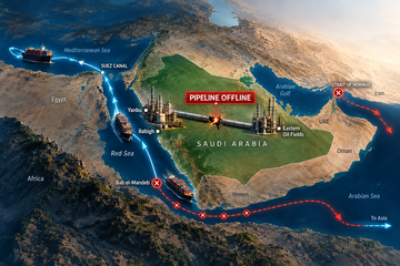
- Saudi pipeline outage compounds supply and logistics risks, fueling PP, PE rally
- S Korea’s petchem restructuring moves from talks to closures
- European natural gas, Asian LNG hit fresh highs amid Middle East tensions
- Global shipping faces persistent bottlenecks across major trade routes
- War or recovery? H1 earnings reshuffle petchem winners and losers
- Oil roller coaster in July H2 fails to derail most polymer rallies
- Dow’s €1.1 billion claim puts Europe’s ethylene cartel dispute back in focus
- Crude oil surges on renewed war premium; will it reverse the polymer slump?