



SEA PE rally faces demand ceiling despite robust cost support, reduced supply
by Thi Huong Nguyen - thihuongnguyen@chemorbis.com
ChemOrbis Price Index reveals that Southeast Asia’s import PE market has remained on a persistent upward trajectory since mid-July, with the latest price levels hovering around two-month highs. Elevated upstream values have been the primary force behind the rally, while tightening availability has provided an additional layer of support.
Nevertheless, the market’s gains have been considerably smaller than the increase in underlying costs. Sellers have attempted to push offers higher, but weak downstream consumption and strong buyer resistance have made it difficult to fully pass rising production and logistics costs through PE prices. Thus, the market has continued to firm, albeit at a slower pace, highlighting an increasingly apparent disconnect between upstream fundamentals and downstream affordability.
Robust costs strengthen sellers’ pricing leverage
The sustained strength of upstream markets has provided a firm foundation for PE pricing throughout the latest rally. Plus, higher shipping costs and freight rates have added further pressure to sellers’ cost structures, particularly as vessel and container availability has become more constrained.
Brent crude futures have generally trended higher since early July, despite entering a period of sharp fluctuations more recently. The weekly average nevertheless stood at around $92/bbl in the week ending August 21, according to ChemOrbis Price Wizard. Spot ethylene prices on CFR China and CFR Southeast Asia followed a similar direction, albeit with less volatility, and have already climbed to their highest levels in around three months.
Despite these increases, PE suppliers have yet to fully reflect higher costs in their offers. Since early July, Brent futures have risen by around 23%, while spot ethylene prices on CFR China and CFR Southeast Asia have increased by approximately 26-27%. In comparison, import PE prices in Southeast Asia have posted more modest gains, with LDPE rising by around 13% and LLDPE and HDPE increasing by roughly 15% over the same period.
The divergence could continue to support a firm pricing stance in the near term. With PE prices lagging behind upstream and feedstock increases, suppliers have a stronger justification to resist discounts and may retain room to seek further hikes, particularly if energy and ethylene values remain elevated. Still, the extent to which this remaining cost pressure can be translated into higher resin prices will ultimately depend on buyers’ willingness and ability to absorb them.
Reduced availability narrows buyers’ options
Supply conditions have added another supportive element to the market, strengthening sellers’ ability to hold firm, even though actual buying interest has remained subdued.
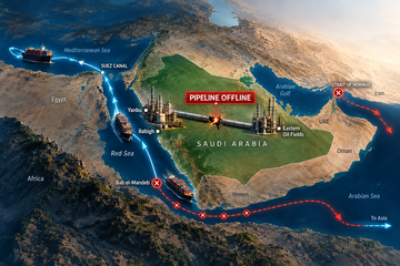
Middle Eastern availability has been constrained by unstable shipping schedules, while the arrival of US cargoes has reportedly been delayed by logistics issues, including lower water levels in the Panama Canal. At the same time, some regional producers have been operating at reduced rates, limiting the availability of locally produced material and increasing reliance on imports in certain markets.
A source at a Taiwanese producer said, “PE prices have moved higher as crude and feedstock costs have increased, while supply is also tightening amid constrained raw material availability and low operating rates.” He added, “Middle Eastern supply is limited because of unstable shipping schedules, while availability of US material reduces as Panama Canal-related delays have slowed shipments.”
A Vietnamese trader similarly noted that buyers currently had limited options, as difficulties in shipping Middle Eastern cargoes have left Chinese materials accounting for a larger share of available offers. However, Chinese cargoes were offered at elevated levels, with some offers standing at levels comparable to those for regional-origin material.
Weak demand remains the market’s hardest obstacle
The market’s failure to absorb larger price hikes despite robust costs and relatively tight availability has, however, underscored the depth of the demand problem. Although the traditional high-demand period is approaching, there has been no clear evidence of a meaningful revival in downstream consumption. Buyers continue to show resistance toward high levels and have largely maintained a cautious, hand-to-mouth purchasing strategy.
A Malaysian player noted, “Demand is not very good, making buyers reluctant to accept higher levels and encouraging them to purchase only minimum volumes.” Similarly, a Vietnamese converter said that his inventory was already low, and he could not delay replenishment indefinitely, but weak demand for finished products meant that end users were also buying only as needed, reducing order entry. He also expected US cargoes to become lower toward the year-end, adding another reason for buyers to avoid building large positions at current levels.
Another Vietnamese trader commented, “Demand remains far from strong despite firmer PE prices. Converters, unable to fully transfer higher resin costs to their end-product customers, are reluctant to purchase high-priced cargoes and are instead searching for lower alternatives or reducing operating rates.” He warned that a prolonged period of elevated resin costs alongside weak downstream demand could put increasing pressure on converters’ margins and potentially force some plants to curtail or suspend production, underscoring the depth of the ongoing demand weakness.
More free plastics news
Plastic resin (PP, LDPE, LLDPE ,HDPE, PVC, GPS; HIPS, PET, ABS) prices, polymer market trends, and more...- Europe’s petchem plants close, assets change hands: How far has restructuring progressed?
- Suez recovery gains ground, but global shipping remains far from normal
- Saudi pipeline outage compounds supply and logistics risks, fueling PP, PE rally
- S Korea’s petchem restructuring moves from talks to closures
- European natural gas, Asian LNG hit fresh highs amid Middle East tensions
- Global shipping faces persistent bottlenecks across major trade routes
- War or recovery? H1 earnings reshuffle petchem winners and losers
- Oil roller coaster in July H2 fails to derail most polymer rallies
- Dow’s €1.1 billion claim puts Europe’s ethylene cartel dispute back in focus
- Crude oil surges on renewed war premium; will it reverse the polymer slump?